


Turbo Blower
Why Choose Us
Our Certificate
The company has passed ISO9001, ISO14001, and ISO45001 international quality management system certifications, and its products have passed the testing of third-party testing agencies certified by GCCA.
Professional team
The company has an independent R&D design department and team, and has established a provincial R&D center energy efficiency testing laboratory. R&D personnel account for more than 15% of the total staff, responsible for product development and process technology guidance.
Quality Control
We design and develop specific products according to the specific needs of our customers. Before products are delivered to customers, we strictly conduct quality testing and controls to ensure product quality is stable, reliable, and energy-saving.
Our Services
The company actively provides technical consultation and answers, and quickly provides customers with corresponding product quotations to ensure that customers have a more comprehensive understanding of the company's products and receive the best service attitude.
Turbine blowers, also called centrifugal blowers, use high-speed impellers to provide velocity to the air or gas. The impeller accelerates and then diffuses the air, converting velocity energy into pressure energy. Turbo blowers are known for their efficiency and ability to generate high pressure. To summarize, the main difference between the two is how they work: Roots blowers use positive displacement to move air, while turbine blowers use centrifugal force to move air.


Benefits of Turbo Blower
High Efficiency
Turbo blowers are known for their exceptional efficiency. Its design allows for even and continuous airflow, minimizing energy loss and maximizing performance. This efficiency leads to lower operating costs and a reduced environmental footprint.
Variable-speed operation
Turbo blowers are often equipped with variable-speed controls that allow the operator to adjust airflow to specific process requirements. This flexibility ensures optimal performance in a wide range of applications, from sewage treatment plants to pneumatic conveyance systems.
Compact design
The turbo blower's compact and streamlined design saves space and can be easily integrated into existing industrial facilities. This feature is especially beneficial in industries where space constraints play a key role.
What are the Applications of Turbo Blower
Wastewater Treatment
Turbo blowers play an important role in wastewater treatment plants by providing the aeration required for biological treatment processes. Precise control of airflow and energy efficiency make it essential for effective and environmentally friendly wastewater treatment.
Pneumatic conveying
In manufacturing and processing industries, turbo blowers are used for pneumatic conveying systems. The ability to provide a consistent and controlled flow of air or gas is critical to the efficient transportation of bulk materials.
Power generation
Turbo blowers are increasingly used in power generation applications, contributing to processes such as providing combustion air and flue gas desulfurization. Its reliability and energy efficiency make it an ideal choice for power plants.
Types of Turbo Blower
Air Foil Bearing Turbo Blower
The air foil bearing turbine blower adopts an excellent overall assembly design, and the main oil pump and the main shaft are connected by a coupling for easy replacement.The design of the oil circuit system can prevent the lubricating oil from being contaminated by the surrounding environment and causing equipment shutdown. It has obvious characteristics such as small vibration, low noise and compact structure.
Centrifugal Turbo Blower
The centrifugal turbine blower uses self-circulation cooling technology while rotating at high speed to ensure 95% high efficiency operation in the entire working rangeThe centrifugal turbine blower uses self-circulation cooling technology while rotating at high speed to ensure 95% high efficiency operation in the entire working range.The simple structure design of the centrifugal turbine blower ensures reliability even under extreme working conditions. It provides high-speed induction motors and permanent magnet synchronous motors, and provides different types of motor options.
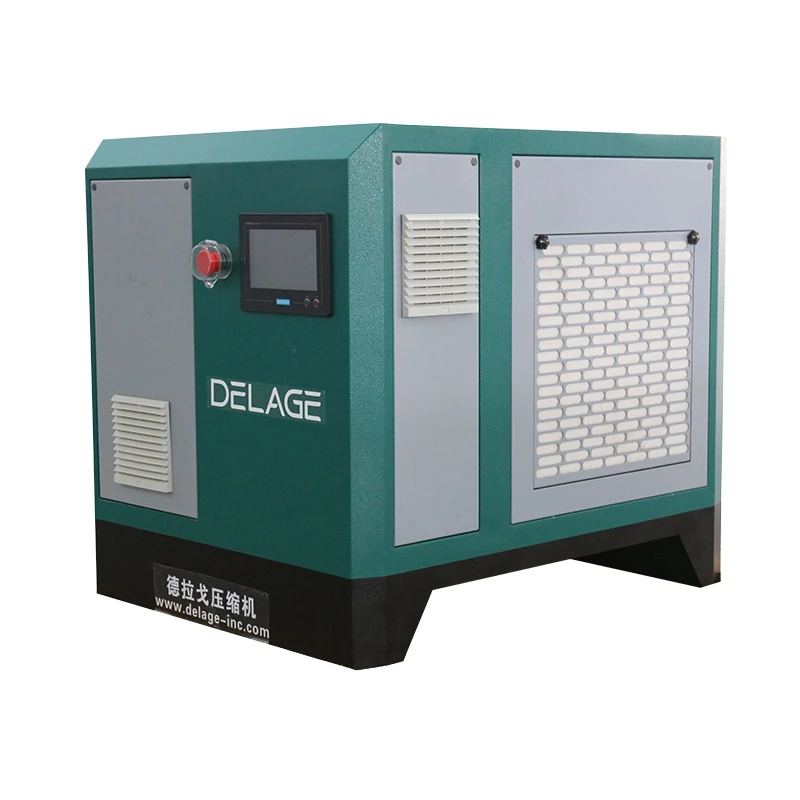
When the impeller rotates at high speed, the gas rotates with it. Under the action of centrifugal force, the gas is thrown into the diffuser behind, and a vacuum zone is formed at the impeller. At this time, fresh gas from the outside enters. impeller. The impeller rotates continuously, and the gas is continuously sucked in and thrown out, thereby maintaining a continuous flow of gas. Compared with reciprocating compressors, centrifugal compressors have the following advantages: compact structure, small size, and light weight; continuous and uniform exhaust, without the need for intermediate tanks and other devices; small vibration, few wearing parts, and no need for bulky and Bulky basic parts; except for bearings, the inside of the machine does not require lubrication, saves fuel, and does not pollute the compressed gas; has high rotation speed; requires little maintenance and is easy to adjust.
Shell material
The super strong die-casting aluminum is used for the turbine blower. The die-casting aluminum is the same as the Benz automobile wheel. Compared with the ordinary aluminum alloy, the die-casting aluminum is stronger and lighter than the iron shell fan.
Motor performance
The turbine blower adopts Taiwan motor, which is a wide frequency, wide voltage motor, listed in: single-phase 110V / 230V industrial three-phase: 220 / 380 / 415 / 660V, etc., motor frequency can be 45-75hz frequency modulation, IP55 protection class F insulation class, its advantage is that the domestic motor can not reach the technology, favored by domestic and foreign customers.
Fan oil seal
German Merkel oil seal is used for turbine blower, and German Merkel (Merkel) material is fluororubber, which can bear-25 ℃ to 300 ℃. Compared with the common oil seal, the temperature of its lip is 20 ~ 50 ℃ higher than that of the working medium, and its performance is more stable, maintenance free, and its service life is longer.
Fan bearing
The core components of the turbine blower are SKF (Germany) and NSK (Japan). The bearing can withstand a maximum speed of 350 ° C and 4000 rpm. For domestic Lo shaft, human-oriented bearing, stable performance, low noise, maintenance free, longer service life, can ensure longer fan operation.
Flow and pressure
A correctly sized blower installation will help to achieve a more energy-efficient process. For instance, in a situation where compressor turndown is employed as the low-pressure source, replacing the compressor with an air blower to deliver 0.3 and 1.5 bar(g) air will result in significant savings. For every 1 bar(g) the air is compressed above the actual demand, 7% of energy is wasted.
Application conditions
Site conditions have a bearing on blower choice. For example, dusty environment or hot humid site for a blower installation might dictate the choice of a technology offering a reliable positive displacement screw, lobe blower or multi stage centrifugal to provide a reliable source of low pressure air with no much of sensitivity to dust or high ambient temperatures. On the other hand, the application criterion of lower energy costs may be best met by a more energy-efficient technology that comes with a higher capital cost.
Initial capital cost vs. greatest ROI
The cheapest solution to purchase does not automatically result in the lowest operating costs. It is therefore advisable not only to consider the investment costs in the design phase, but also to keep an eye on the necessary expenses over the entire life cycle of the machines to get the maximum ROI.
Operating noise levels
A feature of the latest generation of low-pressure blowers is intelligent baffle and canopy design that provides reduced sound levels down to 72dB(a) for an improved working environment. Consequently, installation costs are reduced as there is no need for the provision of noise-insulated rooms and doors.
Service and lifetime support
When it comes to routine maintenance and service support, some older blower technologies may require units to be serviced, repaired or re-furbished offsite. Advanced design developments in the latest oil-free, low-pressure blowers now sees the inclusion of low maintenance components, extended on-site service intervals, each blower technology need to have routine services and checkups , however the each technology design and mechanism differs on the number of consumables and service periods and the benefits of lifetime customer support plans.
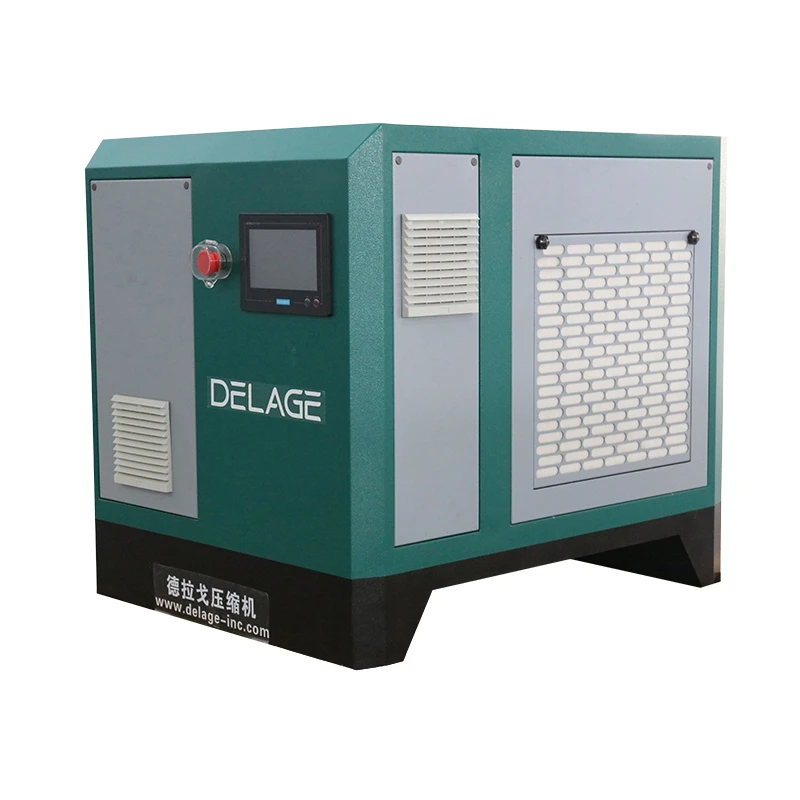
The new turbo blower pump incorporates a frequency inverter so that discharge flow and pressure can be regulated. This in turn lets customers be more efficient and reduce their operating costs. The design used for compression and the application of motors with permanent magnets increases the pump's electromechanical efficiency up to 65%, compared to regular standard machines.
Compressed air in the turbo blower covers the needs of many industrial processes. Bearing in mind that between 50 and 80% of electricity consumption at a treatment plant comes from blowers, more efficient and better performance represents substantial economic savings. Significant advantages are also obtained in the pneumatic transport sector.The machine's low level of sound pollution is another relevant advantage. Due to the air film bearings, there is no contact between the axle and bearings, leading to much lower noise levels than average.
How to Maintain Turbo Blower
Check the oil levels
Running your turbo blower when it's low on oil is a recipe for imminent gear failure. Make sure you check the oil levels in your blower regularly to prevent the rotor lobes from clashing, the end clearances from changing, and other issues.
Change the lubricant
If the lubricant within your turbo blower is dirty, bearings and gears will start to get damaged.
Monitor the inlet filter
A starved inlet occurs when the airflow entering the blower becomes so restricted that there is not enough air supply to properly cool the blower. If this continues, the paint on the blower will bubble or char, the non-gear end plate will wear out, or the blower will seize, resulting in failure.
Prevent over-pressure
You can prevent over-pressure by installing a pressure relief valve, regularly checking the relief valve settings to ensure proper operation, and installing a discharge pressure switch at the point of blower discharge.
Design differences
Turbo blowers are popular for their high efficiency, small footprint and low maintenance. They deliver more air per square foot, reducing aeration system installation costs and the plant's carbon footprint. They also need minimal preventive maintenance, mainly requiring operators to simply change the air filter. All these factors contribute to low life-cycle cost.
Bearing design
Airfoil bearing blowers are simple in design, with no bearing controllers or sensors, and its capital cost is relatively low. They work on a principle similar to journal bearings in car engines in that a viscous fluid is pumped into the clearance between the bearing housing and the rotating shaft. In this case, the viscous fluid is air, which creates a wedge that lifts the shaft off the fixed portion of the bearing. As long as the blower operates at constant pressure and constant flow, there should be no friction.
Motor cooling
Turbo blowers can use either permanent magnet or induction squirrel cage motors. Regardless of type, the motor is cooled using air or water.Air-cooled motors can use either passive or forced air cooling. In a passive system, intake air is drawn across the motor windings before it enters the blower intake for compression. In a forced air system, intake air is drawn using an electric or shaft-mounted fan in the blower enclosure.
Blow-off valves
Blow-off valves protect centrifugal blowers against surge, which occurs when the blower cannot convert enough kinetic energy (airflow) into potential energy (pressure) to overcome the system back pressure. This can happen due to increased header pressure or decreasing flow beyond the blower minimum design speed. When surge occurs, the blower shaft moves around, potentially causing contact between the shaft and bearings. A blow-off valve vents the pressure in the package to prevent this contact.
Environmental conditions
There are many environmental considerations to make when installing high-speed turbo blowers in wastewater treatment plants. Poor power quality, contaminants in the atmosphere, and incorrect piping and ventilation can all result in poor reliability and performance.
Power quality
If the power supply to the blower package is of poor quality, the blower will have poor reliability. The sensitivity of high-frequency electronics used in turbo blowers can heighten the risk of poor power quality, leading to shutdowns or shorter life for motors, VFDs, tuning reactors and sine filters. Problems can arise when the supply voltage is greater or less than the VFD-rated voltage, or when there is harmonic interference from nearby pumps, blowers and nonshielded sensor cables.
Atmospheric contaminants
For reliable turbo blower operation, the surrounding environment must be free of contaminants, including particles and corrosive gases. If the blower process air intake contains hydrogen sulfide (H2S) — such as from an anaerobic digester — then the impellers, air-cooled motors, airfoil bearings, and copper in the magnetic blower bearings can experience corrosion. Cooling air intake containing H2S can corrode the blower control panel, VFD, tuning reactor, sine filter and air-cooled motor windings, ultimately leading to blower failure.
Our Factory
Zhejiang Delage Machinery Compressor Co., Ltd. (referred to as "Delage Machinery" or "Delage Air Compressor") was established in 2013 and is located at No. 1, Gongqu District 1, Chang'an Town, Haining, Jiaxing City, Zhejiang Province (close to Hangzhou and Shanghai), covering an area of approximately 6,398 square meters, and has built a standardized factory building of approximately 15,000 square meters.The company is mainly engaged in the manufacturing and processing of air compressors, power savers and accessories; the wholesale of air compressors and supporting equipment, energy-saving products and supporting equipment, Wujinjiaodian, building decoration materials, plumbing equipment, filtration and purification equipment and accessories, lubricating oil, Retail; repair, maintenance, and leasing services of air compressor equipment and supporting equipment, energy-saving products and supporting equipment; technology development, technical consultation, technology transfer, and technical services in the field of energy saving; engaged in the import and export business of various commodities and technologies (National Except for those restricted or prohibited; except for those involving pre-approval), etc. Products have been widely used in textile, medicine, aerospace, cement, food and other industries.
Our Certificates


FAQ
Q: What is the purpose of a turbo blower?
Q: What is the difference between a blower and a turbo blower?
Q: What is the function of a high speed blower?
Q: How does a positive displacement blower work?
Q: What are the benefits of a blower motor?
Q: What are the disadvantages of blower?
Q: Is a blower useful?
Q: What happens if blower speed is too high?
Q: What is the difference between positive displacement blower and turbo blower?
Q: What is the principle of blowers?
Q: How does a blower system work?
Q: Why is maintenance of blower important?
Routine blower motor cleaning and maintenance not only extends the life of equipment but reduces operating costs, downtime costs and troubleshooting costs. It helps mitigate the majority of these expenses because the issues are caught ahead of time.
Q: Is a turbo called a blower?
Q: Why is it called a blower?
Q: Which type of blowers is widely used?
Q: How much power does a blower use?
Q: What does CFM mean in blowers?
Q: How are blowers measured?
Q: What is a blower equipment?
Q: What is the purpose of blower?
We're professional turbo blower manufacturers and suppliers in China, specialized in providing high quality custom service. We warmly welcome you to wholesale high-grade turbo blower made in China here from our factory.
Turbo Air Blower, Air Foil Bearing Turbo Blower, Centrifugal Turbo Blower